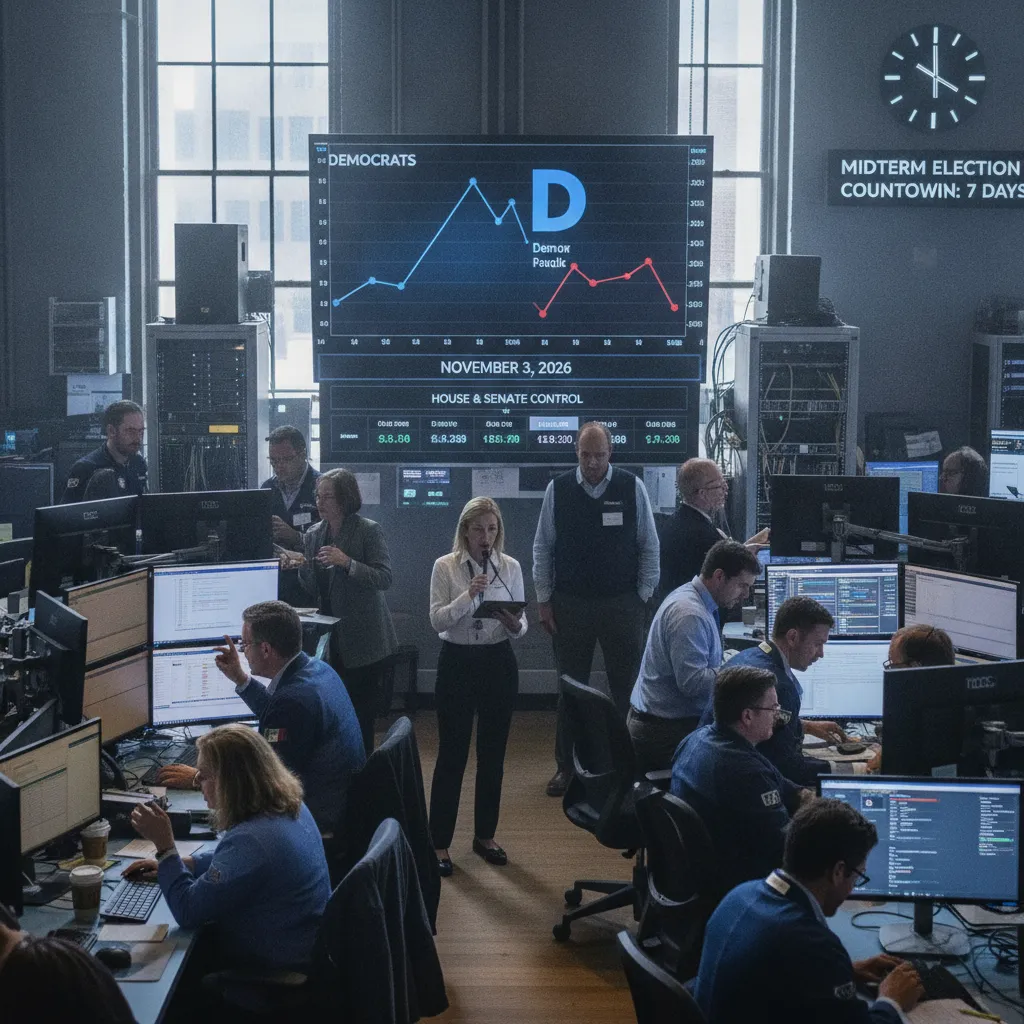
With just over a week remaining until the 2026 midterm elections, speculators on prediction markets are increasingly betting on a decisive victory for the Democratic Party. Data from platforms like Kalshi shows that Democrats are currently viewed as two-to-one favorites to seize control of both the House and the Senate, with a sixty three percent probability assigned to a total sweep. These numbers have remained largely steady since October, reflecting a growing confidence among traders that the current Republican majorities are vulnerable.
This shift in sentiment appears to be tied to recent geopolitical instability and economic pressure. Earlier this year, the likelihood of a Democratic sweep hovered around thirty percent, but those odds climbed significantly following the onset of the U.S.-Iran war and a subsequent spike in gas prices that has squeezed American consumers. While tradition pollsters also suggest Democrats hold an edge in the national popular vote for the House and remain competitive in key red-state Senate races, Republican leadership remains skeptical. House Speaker Mike Johnson recently told Fox News that his travels across the country suggest traditional polling is simply inaccurate.
Despite the strong signals, analysts caution against treating these markets as foolproof crystal balls. Prediction platforms operate differently than scientific polling, relying on financial incentives rather than representative sampling. Recent examples highlight this volatility; for instance, markers heavily favored Flavio Bolsonaro in Brazil shortly before President Lula da Silva secured re-election. Supporters of these platforms argue that percentages represent true probabilities rather than certainties, meaning an upset occurs exactly as often as the lower odds predict. As voters prepare to head to the polls next Tuesday, the gap between market speculation and political rhetoric continues to widen.